Advantage and Disadvantage: Hướng dẫn viết bài chi tiết
Tóm tắt nội dung chính của bài viết
-
Giúp bạn hiểu đúng bản chất dạng bài Advantage and Disadvantage trong IELTS Writing Task 2 và nhận diện nhanh yêu cầu đề ngay từ bước đọc đề
-
Làm rõ sự khác biệt cốt lõi giữa Advantage & Disadvantage và Opinion Essay, tránh nhầm dạng dẫn đến mất điểm Task Response
-
Hướng dẫn cấu trúc bài viết chuẩn 4 đoạn (Introduction – Advantages – Disadvantages – Conclusion) bám sát tiêu chí chấm điểm IELTS
-
Cung cấp bài mẫu band cao kèm phân tích chi tiết theo 4 tiêu chí chấm điểm, giúp người học áp dụng trực tiếp khi luyện Writing
? Phù hợp cho người mới bắt đầu lẫn thí sinh đang đặt mục tiêu Writing 7.0+ và cần một khung làm bài rõ ràng, dễ áp dụng.
“Advantage and Disadvantage” là một trong những dạng bài quen thuộc của IELTS Writing Task 2, nhưng lại khiến nhiều thí sinh mất điểm do phân tích sai yêu cầu đề hoặc triển khai ý thiếu cân bằng. Trong bài viết này, bạn sẽ được hướng dẫn cách nhận diện dạng đề, xây dựng cấu trúc bài viết chuẩn IELTS và triển khai advantage và disadvantage rõ ràng, logic, giúp cải thiện band điểm hiệu quả.

1. Advantage and Disadvantage trong IELTS Writing Task 2 là gì?
Advantages and Disadvantages là một dạng bài phổ biến trong IELTS Writing Task 2, yêu cầu phân tích mặt tích cực (ưu điểm) và tiêu cực (nhược điểm) của một vấn đề, xu hướng hoặc chính sách cụ thể. Bạn phải viết tối thiểu 250 từ, sử dụng ngôn ngữ học thuật trang trọng, và cân bằng hai mặt để đạt Task Response cao (25% điểm)
1.1. Đặc điểm dạng bài Advantage and Disadvantage trong IELTS Writing Task 2
Đề bài thường dạng: “What are the advantages and disadvantages of [chủ đề]?” hoặc “Do the advantages outweigh the disadvantages?”. Bạn cần trình bày cả hai mặt rõ ràng, mỗi mặt một đoạn thân bài, với luận điểm được giải thích và ví dụ cụ thể. Độ dài hai đoạn nên tương đương để tránh thiên vị, giúp Coherence and Cohesion tốt hơn.
Thông thường, đề bài không bắt buộc phải đưa ra quan điểm cá nhân, trừ khi có yêu cầu rõ ràng như “Do you think…?” hoặc “To what extent do you agree?”.
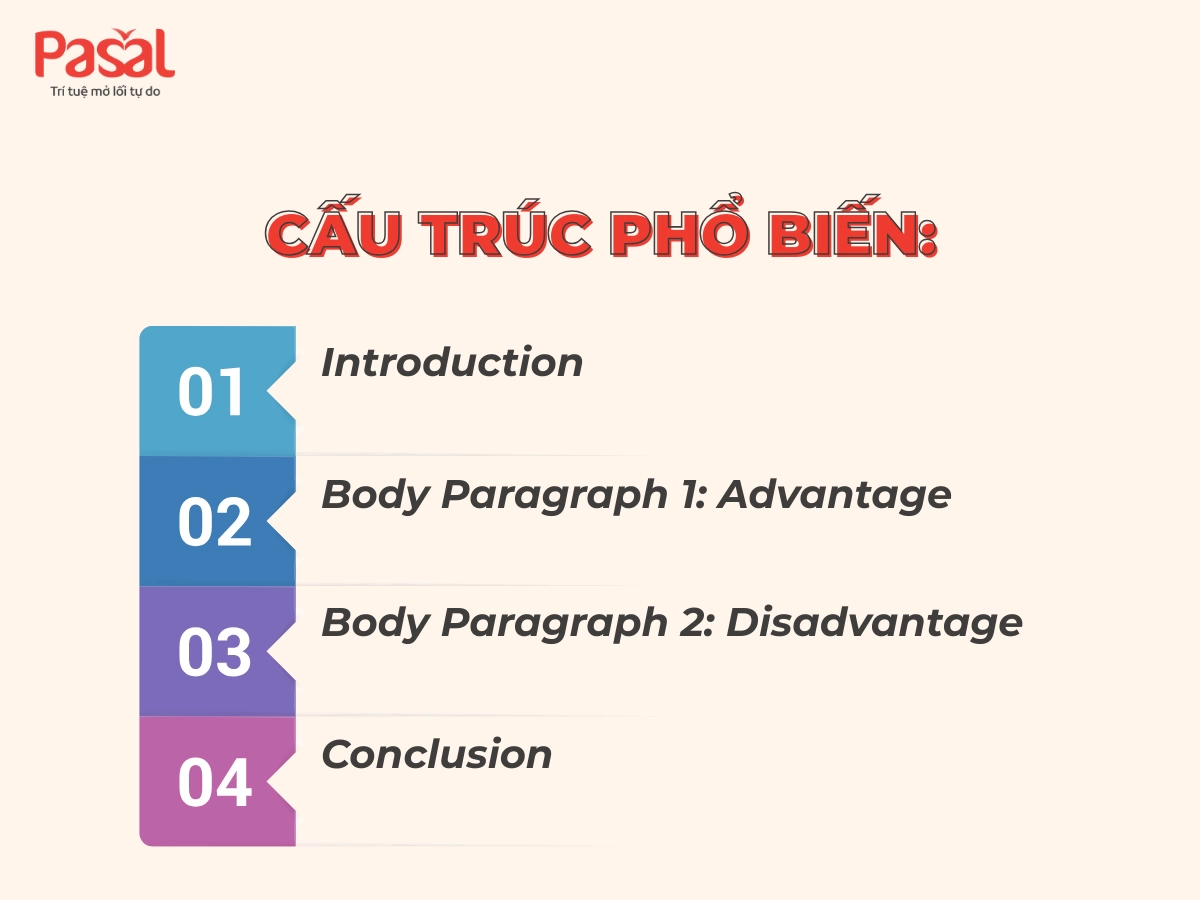
Cấu trúc phổ biến:
-
Mở bài (Introduction): Paraphrase đề bài + nêu thesis statement (e.g., “This essay will discuss both views”). 40-50 từ.
-
Thân bài 1 (Advantages): Topic sentence nêu ưu điểm chính + giải thích + ví dụ (e.g., công nghệ giúp kết nối nhanh). 80-100 từ.
-
Thân bài 2 (Disadvantages): Topic sentence nêu nhược điểm + giải thích + ví dụ (e.g., nghiện mạng xã hội ảnh hưởng sức khỏe).
-
Kết bài (Conclusion): Tóm tắt hai mặt + nêu ý kiến cá nhân nếu đề yêu cầu (e.g., advantages outweigh).
Trong một số trường hợp, bài viết có thể thêm đoạn thứ ba để cân bằng ý hoặc lồng ghép quan điểm cá nhân nếu đề bài cho phép.
1.2. IELTS yêu cầu gì với dạng bài Advantage and Disadvantage?
IELTS Writing Task 2 dạng Advantages/Disadvantages yêu cầu phân tích cân bằng ưu điểm và nhược điểm của một xu hướng, chính sách hoặc vấn đề, với tối thiểu 250 từ và ngôn ngữ học thuật trang trọng. Bạn phải trình bày đầy đủ cả hai mặt (mỗi mặt một đoạn thân bài tương đương độ dài) để đáp ứng Task Response (25% điểm), kèm giải thích cụ thể và ví dụ minh họa.
Task Response (Phản hồi nhiệm vụ)
Trả lời đúng trọng tâm đề bài: Nêu rõ cả advantages VÀ disadvantages, không thiên vị một bên trừ khi đề hỏi “outweigh” (e.g., “Do the advantages outweigh…?”). Thesis statement phải rõ ràng trong Introduction, mỗi luận điểm phát triển sâu 1-2 ý chính thay vì liệt kê nhiều.
Coherence and Cohesion (Mạch lạc)
Sử dụng cấu trúc 4 đoạn chuẩn: Introduction (paraphrase + thesis), Body 1 (advantages), Body 2 (disadvantages), Conclusion (tóm tắt). Từ nối logic như “One advantage is…”, “On the other hand…”, “For instance…” để liên kết ý mượt mà.
Lexical Resource & Grammar (Từ vựng/Ngữ pháp)
Từ vựng topic-specific (e.g., “facilitate connectivity”, “pose health risks”) đa dạng nhưng chính xác; câu phức đơn giản (although, despite) chiếm 50% để đạt Band 7+. Tránh lỗi cơ bản, giữ giọng formal (không dùng contractions, slang).
Lưu ý chung
Bài viết 250-300 từ trong 40 phút; ưu tiên 1 luận điểm sâu mỗi mặt với ví dụ thực tế. Nếu đề có “outweigh”, nêu opinion rõ và ưu tiên phân tích mặt lấn át ở Body 2.
1.3. Phân biệt Advantage and Disadvantage với Opinion Essay
Trong IELTS Writing Task 2, Advantage/Disadvantage tập trung phân tích ưu nhược điểm của một vấn đề còn Opinion Essay yêu cầu bày tỏ quan điểm cá nhân rõ ràng về một chủ đề. Sự khác biệt lớn nhất nằm ở Task Response: dạng đầu có thể trung lập, dạng sau phải chọn stance từ Introduction đến Conclusion.
- Advantage and Disadvantage: Tập trung phân tích hai mặt tích cực và tiêu cực của vấn đề; quan điểm cá nhân có thể có hoặc không.
- Opinion Essay: Bắt buộc người viết đưa ra quan điểm cá nhân rõ ràng ngay từ đầu và bảo vệ quan điểm đó xuyên suốt bài viết.
Mẹo nhận biết nhanh:
Nếu đề bài có các cụm như “What is your opinion?” hoặc “Do you think…?” → cần nêu ý kiến.
Nếu chỉ yêu cầu “Discuss the advantages and disadvantages” → tập trung phân tích hai mặt.
2. Khi nào gặp dạng bài Advantage and Disadvantage
Dạng bài Advantages and Disadvantages trong IELTS Writing Task 2 xuất hiện thường xuyên (khoảng 15-20% các đề thi), đặc biệt trong các kỳ thi từ 2024-2026 khi British Council, IDP và Cambridge tăng tần suất đề về công nghệ, môi trường, giáo dục và làm việc từ xa. Bạn có thể gặp bất cứ lúc nào trong 40 phút Task 2, thường ở dạng đề thực tế hoặc xu hướng xã hội.
2.1. Các dạng câu hỏi thường gặp
- “Discuss the advantages and disadvantages of …”
- “What are the advantages and disadvantages of …?”
- “Do the advantages outweigh the disadvantages?”
2.2. Dấu hiệu nhận biết đề Advantage and Disadvantage
Dạng trung lập (không opinion): “What are the advantages and disadvantages of…?”, “Discuss the advantages and disadvantages of…”, “What are the benefits and drawbacks?”.
Dạng có opinion: “Do the advantages outweigh the disadvantages?”, “Discuss both and give your own opinion”.
Từ khóa “advantages/disadvantages/benefits/drawbacks” luôn có sẵn, dễ nhận biết ngay 5 giây đọc đề
2.3. Lỗi nhầm lẫn đề bài khiến mất điểm
Nhầm lẫn dạng bài Advantage/Disadvantage với Opinion hoặc Discussion là lỗi phổ biến nhất trong IELTS Writing Task 2, dẫn đến mất Task Response nghiêm trọng (25% điểm) vì không trả lời đúng yêu cầu. Thí sinh thường viết opinion một bên thay vì cân bằng ưu/nhược điểm, khiến band tụt từ 7.0 xuống 5.5-6.0
- Không phân tích đủ cả advantage và disadvantage
- Viết thiên lệch về một phía
- Nhầm lẫn sang dạng Opinion Essay
- Bố cục rời rạc, thiếu liên kết
3. Cách phân tích đề Advantage and Disadvantage trong IELTS
Phân tích đề (analyze the prompt) là bước đầu tiên và quan trọng nhất trong IELTS Writing Task 2 dạng Advantages/Disadvantages, giúp tránh lạc đề và đảm bảo Task Response cao (25% điểm). Dành 2-3 phút đầu đọc kỹ đề bài để xác định chính xác loại dạng và yêu cầu cụ thể.
3.1. Xác định chủ đề chính của đề bài
Gạch chân từ khóa quyết định:
-
Dạng 1 (Trung lập): “What are the advantages and disadvantages…”, “Discuss advantages and disadvantages…” → Phân tích cân bằng 2 mặt, KHÔNG cần opinion mạnh.
-
Dạng 2 (Có opinion): “Do the advantages outweigh the disadvantages?”, “Discuss both and give your opinion” → Phải nêu bên nào mạnh hơn ở thesis + conclusion.
Ví dụ: “advantages outweigh” → ưu tiên phân tích advantages nhiều hơn ở Body 2.
3.2. Phân tích topic và yêu cầu
- Xác định chủ đề chính: Technology? Society? Education? (e.g., “home schooling”, “social media”).
- Phân tích instructions: Luôn có “Discuss…” hoặc ngầm yêu cầu 2 mặt → outline ngay Body 1 (Adv), Body 2 (Disadv).
- Kiểm tra opinion: Có từ “your opinion/your view” không? Nếu có → Conclusion restate stance.
3.3. Có cần nêu quan điểm cá nhân không?
Không bắt buộc trong mọi trường hợp – phụ thuộc rõ ràng vào từ khóa cuối đề bài. Dạng bài chia thành 2 loại chính để tránh mất Task Response (25% điểm).
Dạng 1: Không cần opinion (Discuss both)
-
Keywords: “What are the advantages and disadvantages of…?”, “Discuss advantages and disadvantages…”.
-
Yêu cầu: Phân tích cân bằng ưu/nhược điểm (Body 1: Adv, Body 2: Disadv). Thesis: “This essay will discuss both”. Conclusion chỉ tóm tắt, không chọn bên.
Dạng 2: Bắt buộc nêu opinion (Outweigh)
-
Keywords: “Do the advantages outweigh the disadvantages?”, “Discuss both and give your own opinion”.
-
Yêu cầu: Thesis rõ stance ngay Intro (e.g., “advantages outweigh”), phân tích cả hai nhưng ưu tiên bên mạnh hơn ở Body 2, Conclusion restate opinion.
Mẹo nhận diện nhanh
Đọc câu cuối đề bài: Có “outweigh/your opinion/your view”? → Phải opinion. Không có → Cân bằng hai mặt. Luôn outline theo loại để tránh nhầm Opinion Essay.
4. Cấu trúc bài Advantage and Disadvantage chuẩn IELTS
Cấu trúc chuẩn cho IELTS Writing Task 2 dạng Advantages/Disadvantages gồm 4 đoạn rõ ràng (250-300 từ), đảm bảo Task Response và Coherence cao. Có 2 biến thể chính tùy đề bài: không opinion (cân bằng) hoặc có opinion (outweigh).
4.1. Cách viết Introduction
-
Introduction trong IELTS Writing Task 2 dạng Advantages/Disadvantages cần 40-60 từ, gồm 2 phần: General Statement (paraphrase đề bài) + Thesis Statement (nêu cấu trúc bài), tạo ấn tượng Task Response ngay từ đầu. Tránh copy nguyên đề để tăng Lexical Resource.
Cấu trúc 2 câu chuẩn:
Câu 1 (General Statement): Paraphrase topic + keywords bằng từ đồng nghĩa.
Ví dụ đề: “What are the advantages and disadvantages of online education?”
→ “In recent years, distance learning through digital platforms has gained significant popularity.”Câu 2 (Thesis Statement): Tùy dạng đề.
-
Dạng không opinion: “This essay will examine both the benefits and drawbacks of this trend.”
-
Dạng outweigh: “While there are certain merits, I believe the advantages outweigh the disadvantages.”
-
4.2. Body Paragraph 1 – Advantage
Body Paragraph 1 (Advantages) trong IELTS Writing Task 2 dạng Advantage/Disadvantage dài 80-100 từ, tập trung 1-2 ưu điểm chính với cấu trúc PEEL (Point – Explanation – Example – Link). Đoạn này thường đặt trước để cân bằng bài viết, tăng Coherence (25% điểm).
Cấu trúc 4 câu chuẩn
Câu 1 (Topic Sentence): Nêu ưu điểm chính rõ ràng.
“One of the primary advantages of online learning is its flexibility in terms of time and location.”
Câu 2-3 (Explanation + Example): Giải thích cụ thể + ví dụ thực tế.
“This allows students to study at their own pace and balance work and education effectively. For instance, working professionals can access lectures anytime via platforms like Coursera.”
Câu 4 (Link): Kết nối lại thesis hoặc dẫn sang nhược điểm.
“Therefore, this accessibility significantly enhances educational opportunities.”
4.3. Body Paragraph 2 – Disadvantage
Body Paragraph 2 (Disadvantages) trong IELTS Writing Task 2 dạng Advantage/Disadvantage cũng dài 80-100 từ, sử dụng cấu trúc PEEL (Point – Explanation – Example – Link) để phân tích nhược điểm một cách logic và cân bằng với Body 1. Đoạn này thường bắt đầu bằng từ nối chuyển tiếp như “However” để đảm bảo Coherence cao.
Cấu trúc 4 câu chuẩn
Câu 1 (Topic Sentence): Nêu nhược điểm chính rõ ràng.
“However, one significant drawback of online learning is the lack of direct interaction between students and teachers.”
Câu 2-3 (Explanation + Example): Giải thích chi tiết + ví dụ cụ thể.
“This can hinder effective feedback and personalized guidance. For example, students may struggle to clarify complex concepts without face-to-face discussions.”
Câu 4 (Link): Kết nối lại hoặc dẫn đến opinion.
“Consequently, this limitation may impede comprehensive learning outcomes.”
4.4. Conclusion
Conclusion trong IELTS Writing Task 2 dạng Advantage/Disadvantage dài 30-50 từ (2-3 câu), có nhiệm vụ tóm tắt hai mặt đã thảo luận và tái khẳng định thesis từ Introduction, tạo ấn tượng hoàn chỉnh về Task Response và Coherence. Không đưa ý mới, chỉ paraphrase để tránh lặp từ.
Cấu trúc chuẩn 2 câu
Câu 1 (Tóm tắt): “In conclusion/In summary,” + nhắc lại ưu/nhược điểm ngắn gọn.
Câu 2 (Opinion – tùy dạng):
-
-
Không opinion: “Overall, both benefits and drawbacks should be carefully considered.”
-
Có opinion: “On balance, the advantages outweigh the disadvantages.”
-
5. Cách viết Advantage and Disadvantage đạt band cao
Để viết bài Advantages and Disadvantages đạt band cao (7.0+), bạn cần làm tốt 3 phần: phân tích đề, dàn ý rõ ràng, và ngôn ngữ “ăn điểm”. Dưới đây là bản hướng dẫn ngắn gọn, dễ áp dụng.
5.1. Phát triển ý rõ ràng, không lan man
Có 2 kiểu câu hỏi chính:
-
Chỉ hỏi: “What are the advantages and disadvantages…?” → Liệt kê, phân tích cả hai mặt, không cần nói bên nào mạnh hơn.
-
Hỏi thêm: “Do the advantages outweigh the disadvantages?” → Vừa nêu ưu – nhược, vừa trả lời rõ bên nào hơn trong mở bài và kết bài.
Mẹo: Gạch chân từ khóa (người, nơi, thời gian, phạm vi) để tránh lạc đề.
5.2. Ngôn ngữ, cấu trúc giúp kéo band
- Câu chủ đề cho advantages:
It is undeniable that online education offers several benefits to learners.
One of the main advantages is that…
- Câu chủ đề cho disadvantages:
However, this trend also has its drawbacks.
Nevertheless, some potential disadvantages should be considered.
- Từ nối nên dùng:
Thêm ý: Moreover, Furthermore, In addition.
Chuyển sang ý trái ngược: However, On the other hand, Nevertheless.
Kết quả: Therefore, Consequently, As a result.
Đa dạng từ vựng “advantage/disadvantage”: benefit, merit, strength, positive aspect, downside, drawback, limitation, negative consequence.
5.3. Cách phát triển ý “ăn điểm”
Để tránh liệt kê hời hợt, mỗi ý nên theo chuỗi: Idea → Explain → Example → Result.
Ví dụ với topic “online learning” (Body 1 – Advantage):
-
Idea: One of the main advantages is that students can study from anywhere.
-
Explain: This means they do not need to spend time and money commuting to school every day.
-
Example: For instance, many Vietnamese students now attend international courses online without moving abroad.
-
Result: As a result, higher education becomes more accessible to people from different backgrounds.
Làm tương tự với disadvantage, nhưng nhấn vào negative result (stress, inequality, health problems…).
5.4. Ví dụ phù hợp tiêu chí Task Response
Ví dụ nên:
- Liên quan trực tiếp đến đề
- Ngắn gọn, dễ hiểu
- Hỗ trợ lập luận rõ ràng
6. Bài mẫu Advantage and Disadvantage trong IELTS
6.1. Bài mẫu Advantage and Disadvantage band 7.5
Đề bài phổ biến: “In some countries, governments are encouraging industries and businesses to move to regional areas outside the big cities. Do the advantages of this trend outweigh the disadvantages?”
Bài này nhắm band 7.5+, với cấu trúc chuẩn, từ vựng học thuật đa dạng, ví dụ cụ thể và cân bằng hai mặt.
IELTS Writing Task 2 Sample – Band 7.5+
Prompt:
In some countries, governments are encouraging industries and businesses to move to regional areas outside the big cities. Do the advantages of this trend outweigh the disadvantages?
Introduction
In recent years, many governments have implemented policies to relocate industries and businesses from urban centers to rural or regional areas. While this trend presents certain challenges, I believe its benefits significantly surpass the drawbacks.
Body Paragraph 1 – Advantages
One of the primary advantages of decentralizing industries is the reduction of urban congestion and environmental degradation. Major cities often suffer from overcrowding, traffic jams, and air pollution due to concentrated industrial activities. By moving factories and offices to regional areas, governments can alleviate these issues, leading to improved quality of life for city dwellers. For instance, in China, the relocation of manufacturing hubs from Beijing to inland provinces has noticeably decreased smog levels in the capital, as reported by environmental agencies.
Furthermore, this policy fosters economic development in underdeveloped regions. Regional areas typically lack job opportunities and infrastructure, resulting in high unemployment and migration to cities. Relocating businesses creates employment, stimulates local economies, and reduces regional disparities. A case in point is Australia’s regional incentive programs, which have boosted GDP growth in rural states by attracting tech firms.
Body Paragraph 2 – Disadvantages
Despite these benefits, there are notable drawbacks, particularly concerning infrastructure and workforce challenges in remote areas. Regional locations often lack adequate transportation networks, reliable power supplies, and skilled labor pools, which can hinder business operations and increase initial setup costs. Companies may face delays in logistics and higher expenses for training local workers, potentially discouraging investment.
Additionally, such relocations could strain local communities unaccustomed to industrial growth. Rapid development might lead to environmental damage, such as deforestation or water scarcity, and social issues like rising living costs that outpace wage growth. In India, for example, some relocated industrial zones have sparked protests over land acquisition and pollution affecting agriculture.
Conclusion
In conclusion, although relocating industries to regional areas poses logistical and social challenges, the advantages of easing urban pressures and promoting balanced regional growth far outweigh these disadvantages. Governments should support this trend with targeted infrastructure investments to maximize its positive impacts.
(Word count: 278)
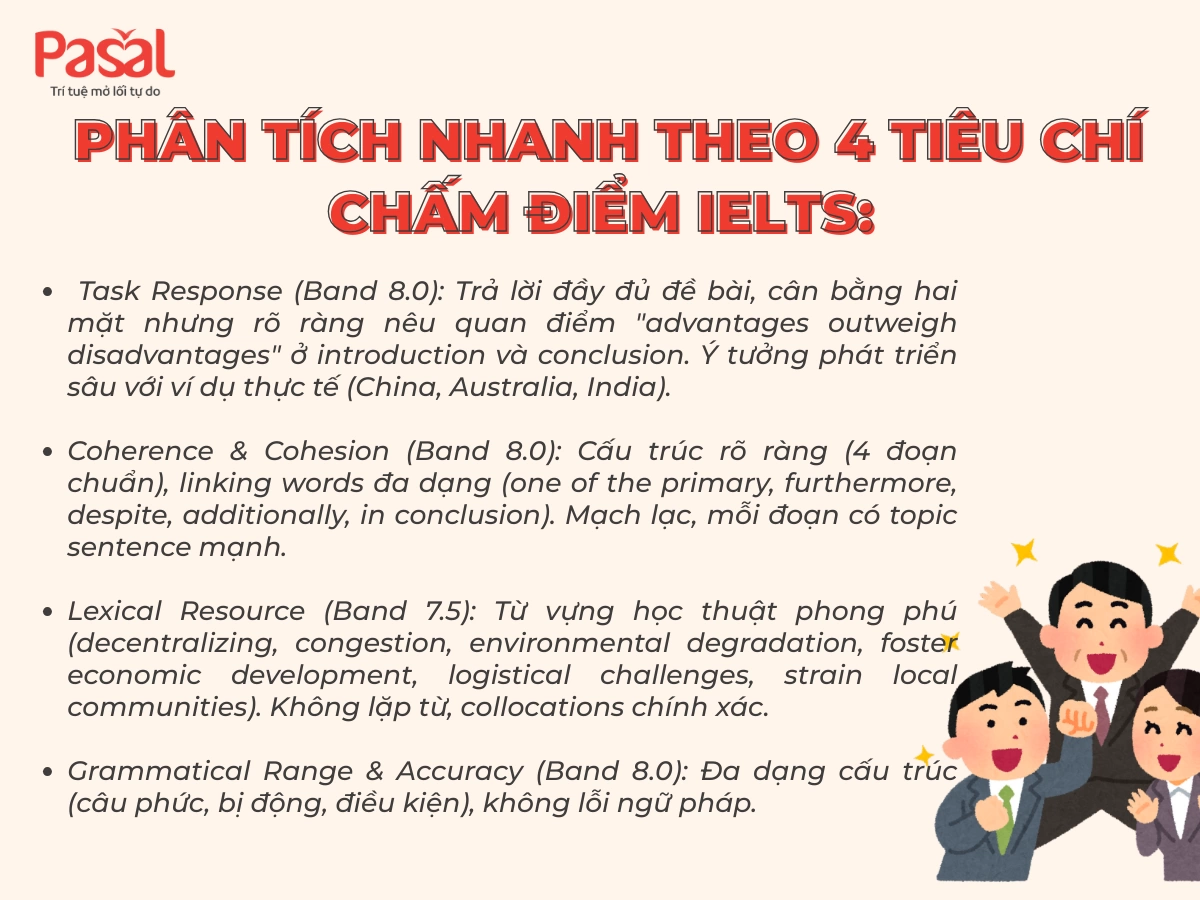
6.2 Phân tích nhanh theo 4 tiêu chí chấm điểm IELTS:
Để phân tích bài viết dạng Advantages/Disadvantages theo 4 tiêu chí chấm điểm IELTS Writing Task 2 (mỗi tiêu chí chiếm 25%), ta áp dụng vào cấu trúc chuẩn đã hướng dẫn trước. Dưới đây là phân tích nhanh, tập trung vào cách đạt band 7.0+.
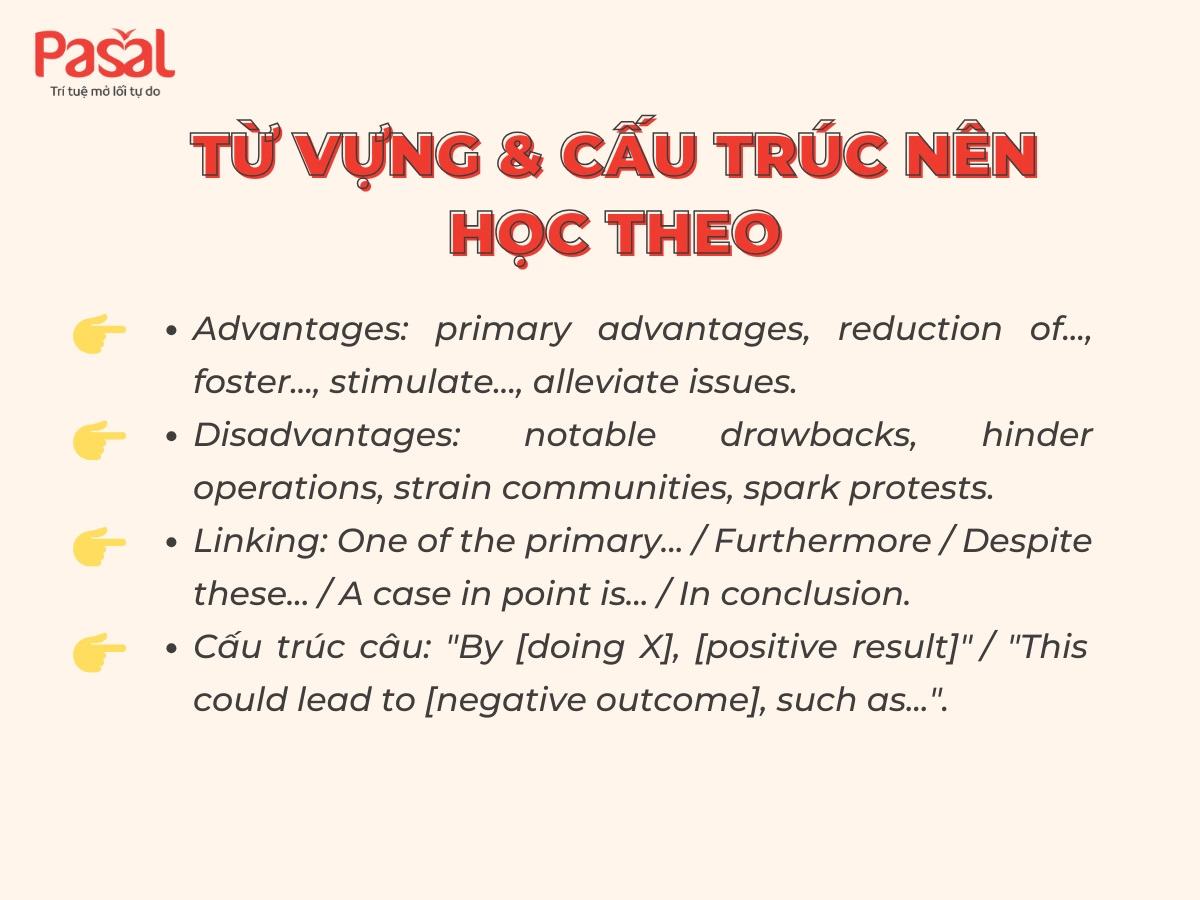
6.3 Từ vựng & cấu trúc nên học theo:
Kết luận:
Tóm lại, dạng bài Advantage and Disadvantage trong IELTS Writing Task 2 đòi hỏi thí sinh phải đọc kỹ yêu cầu đề, phân tích cân bằng cả ưu điểm và nhược điểm, đồng thời triển khai ý mạch lạc theo cấu trúc chuẩn. Khi xác định đúng loại đề (có hoặc không yêu cầu opinion), xây dựng body paragraph rõ ràng và sử dụng ngôn ngữ học thuật phù hợp, bạn hoàn toàn có thể cải thiện Task Response và nâng band điểm Writing hiệu quả. Việc luyện tập thường xuyên theo đúng cấu trúc sẽ giúp bạn tự tin xử lý dạng bài này trong phòng thi.
Xem thêm: